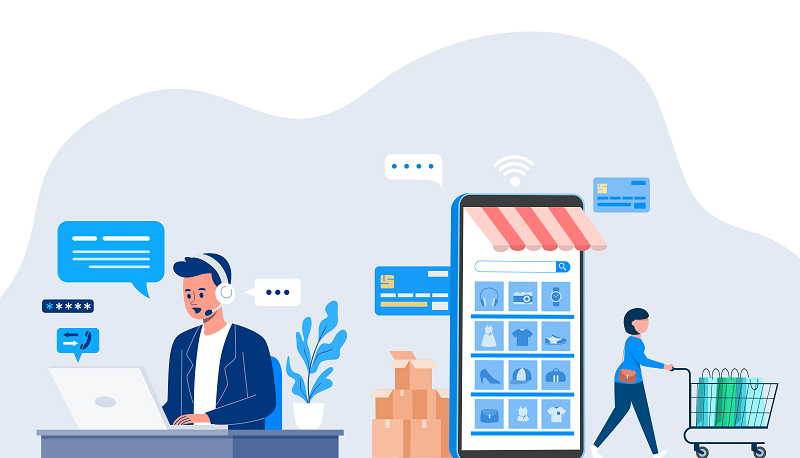
As ecommerce stores grow, customer support quickly becomes one of the most demanding parts of the business. More orders mean more questions about shipping, returns, and product details. This is why many brands choose to outsource customer service ecommerce operations.
Managing everything in-house can become expensive and difficult to scale. Hiring, training, and maintaining a support team takes time and resources. For many Shopify merchants, outsourcing is a practical way to handle increasing demand without slowing down growth.
When done right, outsourcing helps improve response times, reduce costs, and deliver a better customer experience.
What Is Ecommerce Customer Service Outsourcing?
Ecommerce customer service outsourcing involves using external teams or systems to handle customer interactions rather than managing everything internally.
These services typically cover:
- customer inquiries
- order tracking requests (WISMO)
- returns and refunds
- product questions
- general support
By outsourcing ecommerce support, businesses can maintain consistent communication with customers while focusing on growth.
Why Ecommerce Businesses Outsource Customer Support
Many brands choose customer support outsourcing and ecommerce strategies to improve efficiency and scalability.
Cost efficiency
Hiring and managing an internal team can be expensive. Outsourcing reduces costs related to salaries, training, and infrastructure.
Scalability
Outsourced teams can handle increased demand during peak seasons without requiring additional hiring.
Faster response times
Professional e-commerce support services are designed to respond quickly, improving customer satisfaction.
Focus on core business.
By outsourcing support, businesses can focus more on marketing, product development, and operations.
When Support Becomes a Bottleneck
Consider a Shopify store that suddenly experiences rapid growth during a seasonal promotion.
Orders increase, but the support team remains the same size. Customers start asking more questions about delivery times, product availability, and returns. Response times slow down, and customers become frustrated.
Some customers abandon their purchase because they cannot get quick answers. Others leave negative feedback due to delayed responses.
To address this, many businesses are now turning to AI-driven support tools that can respond instantly and reduce pressure on support teams.
In this situation, outsourcing support or using scalable systems can prevent delays and maintain a consistent customer experience.
Types of E-commerce Customer Support Solutions
There are several ways businesses can implement e-commerce customer support solutions.
Dedicated outsourced teams
External agents handle customer interactions as an extension of your brand.
Call center outsourcing
Phone-based support is managed by trained external teams.
Hybrid support models
A combination of in-house staff and outsourced teams provides flexibility.
Automated support systems
Technology-driven solutions handle repetitive tasks and improve efficiency.
Each model offers different benefits depending on your business needs.
How AI and Automation Improve Ecommerce Support
Automation is transforming how businesses manage customer support.
Modern systems can handle a large portion of customer interactions without human involvement. This improves response speed and reduces workload.
AI-powered tools can:
- Answer frequently asked questions instantly
- Provide order and delivery updates
- assist customers during checkout
- handle high volumes of inquiries
For example, many stores are adopting AI-powered call assistants to handle inbound customer calls and provide real-time support.
These systems work alongside traditional ecommerce support services to create a more efficient and scalable support structure.
In addition, using a modern ecommerce communication system ensures customers can easily reach your business when needed.
By combining automation with outsourcing, businesses can deliver faster and more consistent support.
Benefits of Outsourcing Customer Service in Ecommerce
Outsourcing offers several advantages for growing businesses.
Reduced operational costs
Businesses save money by avoiding the costs of hiring and managing large teams.
Improved customer experience
Faster responses and better availability lead to higher satisfaction.
Flexibility
Support capacity can be adjusted based on demand.
Access to expertise
Outsourcing providers often have experience handling ecommerce support efficiently.
Challenges of Ecommerce Customer Service Outsourcing
While outsourcing is beneficial, there are a few challenges to consider.
Less direct control
External teams may require clear guidelines to maintain brand consistency.
Training requirements
Outsourced teams need to understand your products and policies.
Quality consistency
Maintaining consistent service quality requires monitoring and communication.
Addressing these challenges ensures better results from outsourcing.
FAQ
What does outsource customer service ecommerce mean?
It means using external teams or systems to handle customer support instead of managing everything in-house.
Is ecommerce customer service outsourcing cost-effective?
Yes. It reduces costs related to hiring, training, and managing internal support teams.
What are outsourced ecommerce support services?
These are external services that handle customer inquiries, order tracking, and general support tasks.
Can outsourcing improve customer experience?
Yes. Faster response times and better availability improve customer satisfaction.
Do ecommerce customer support solutions include automation?
Yes. Many modern solutions combine outsourcing with automation to improve efficiency and scalability.
The Bottom Line
Choosing to outsource customer service ecommerce operations can help businesses scale faster without increasing complexity.
By combining outsourcing with automation and efficient processes, ecommerce brands can improve response times, reduce costs, and deliver better customer experiences.
If you are looking to grow your store while maintaining strong support, exploring outsourcing strategies can be a practical next step.